Why Beetroot Juice Keeps Showing Up in Longevity Research
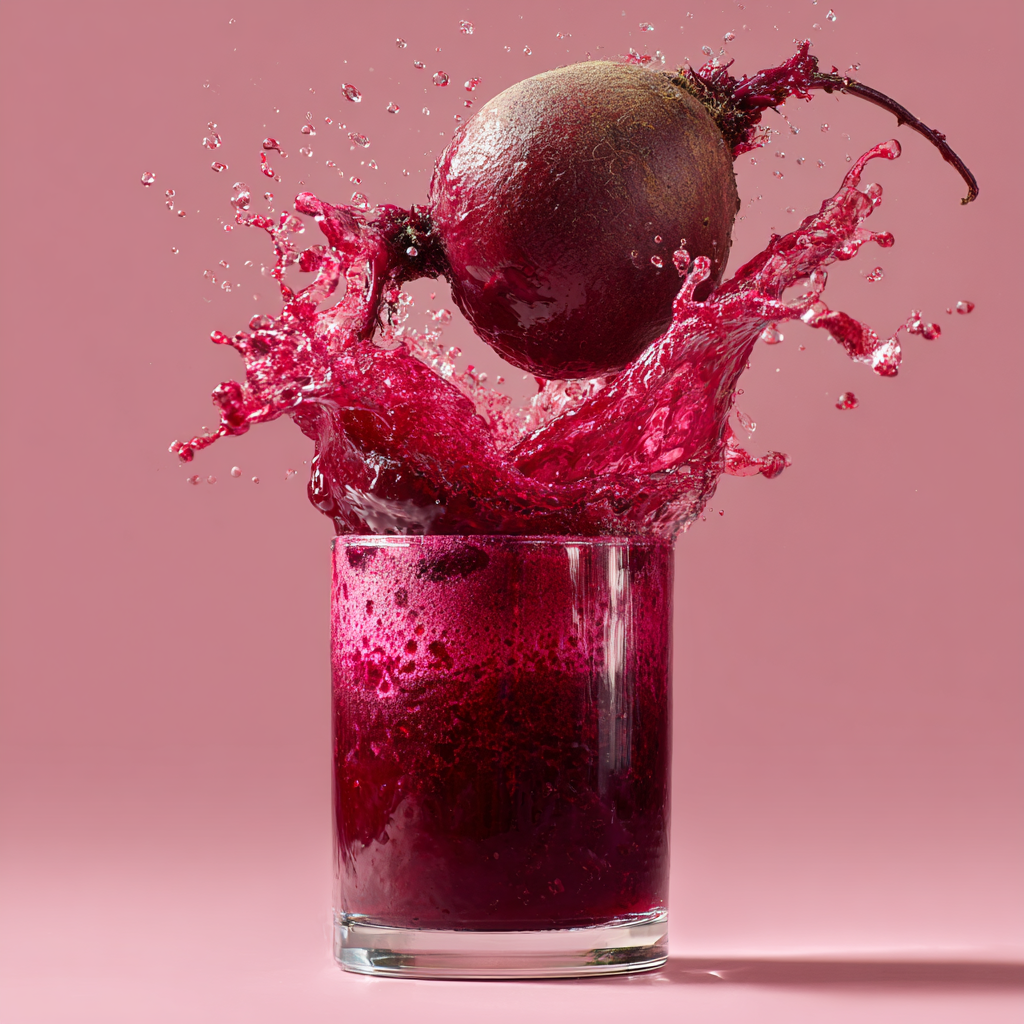
It lowers blood pressure
A 2013 meta-analysis of sixteen clinical trials found that beetroot juice supplementation reduced systolic blood pressure by an average of 4.4 mmHg. That might sound modest, but population-level data suggests that even a 2 mmHg reduction in systolic blood pressure is associated with a 10% decrease in stroke mortality.
A double-blind crossover trial published in Frontiers in Physiology showed that a single dose of beetroot juice — containing about 7 mmol of nitrate — lowered aortic systolic blood pressure by 5.2 mmHg within 30 minutes. Aortic blood pressure is a stronger predictor of cardiovascular events than the brachial reading you get at a doctor's office, which means earlier studies measuring only arm pressure may have underestimated the benefit.
In 2025, a twelve-week trial in postmenopausal women found that daily beetroot extract improved carotid artery stiffness and increased circulating nitric oxide levels without any change in medication. Arterial stiffness is one of the most reliable predictors of cardiovascular risk as we age.
It improves exercise performance
Professor Andy Jones and his team at the University of Exeter published the landmark finding in 2009: half a liter of beetroot juice per day for three days led to a 16% increase in time to exhaustion during high-intensity exercise. Follow-up work showed that two concentrated 70ml shots was the optimal dose, with peak benefit arriving two to three hours after ingestion.
A 2025 meta-analysis in Nutrients confirmed that beetroot juice enhances physical performance when taken either acutely (two to three hours before exercise) or chronically (three or more consecutive days), with an optimal nitrate dose between 515 and 1,017 mg per day. The benefits were observed in both athletes and recreationally active people.
Nitric oxide improves blood flow to working muscles, reduces the oxygen cost of submaximal exercise, and helps your mitochondria produce energy more efficiently.
It feeds the bacteria that protect your heart
This is the part that connects directly to what Cnvrg measures.
The nitrate in beetroot juice does not convert to nitric oxide on its own. It relies on specific bacteria living on your tongue to reduce nitrate into nitrite. Your stomach then converts that nitrite into nitric oxide. Without those bacteria, the pathway stalls.
A 2025 study from the University of Exeter — the largest of its kind — found that two weeks of nitrate-rich beetroot juice reshaped the oral microbiome in older adults. It increased the abundance of the nitrate-reducing bacteria Cnvrg measures and decreased the competing species. The older group also saw a measurable drop in blood pressure that did not occur with the placebo.
In other words, beetroot juice does not just supply raw material for nitric oxide. It actively cultivates the oral bacteria that make the conversion possible. That feedback loop is visible on your Cnvrg oral panel — if you retest after a 10-day protocol, you should see it move.
How to use it
The effective dose across most studies is about 6 to 8 mmol of nitrate per day — roughly 500ml of whole beetroot juice or two concentrated 70ml shots (such as Beet It Sport). Some people see blood pressure changes within days. Arterial stiffness improvements in the twelve-week trial appeared by week four.
Timing matters for exercise. Drink it two to three hours before training for the best results.
Consistency matters for cardiovascular benefits. A single dose produces a temporary effect. Sustained intake over days to weeks is where lasting changes show up.
Whole beets work too. Roasted beets, raw beet salad, and beet smoothies all contain dietary nitrate, though concentrated juice delivers a more standardized dose.
Pair it with nitrate-rich greens. Arugula, spinach, celery, and radishes support the same pathway and compound the effect.
The bottom line
Beetroot juice is one of the most studied, most accessible, and most evidence-backed ways to support nitric oxide production. It lowers blood pressure, improves arterial flexibility, enhances exercise capacity, and feeds the oral bacteria that keep the whole system running.
It is not a supplement that requires faith. It is a food with fifteen years of clinical trial data behind it.
---
Sources
- Siervo M, et al. Inorganic nitrate and beetroot juice supplementation reduces blood pressure in adults. Journal of Nutrition. 2013;143(6):818-826.
- Bahadoran Z, et al. Effect of beetroot juice on aortic and brachial blood pressure. Frontiers in Physiology. 2019;10:47.
- Effect of 12-week dietary nitrate supplementation on carotid arterial stiffness in postmenopausal females. Am J Physiol Heart Circ Physiol. 2025.
- Jones A, et al. University of Exeter beetroot juice and exercise performance research program. 2009–2025.
- Effects of beetroot juice on physical performance: a systematic review and meta-analysis. Nutrients. 2025.
- University of Exeter. Nitrate-rich beetroot juice reshaped oral microbiome and lowered blood pressure in older adults. Free Radical Biology and Medicine. 2025.